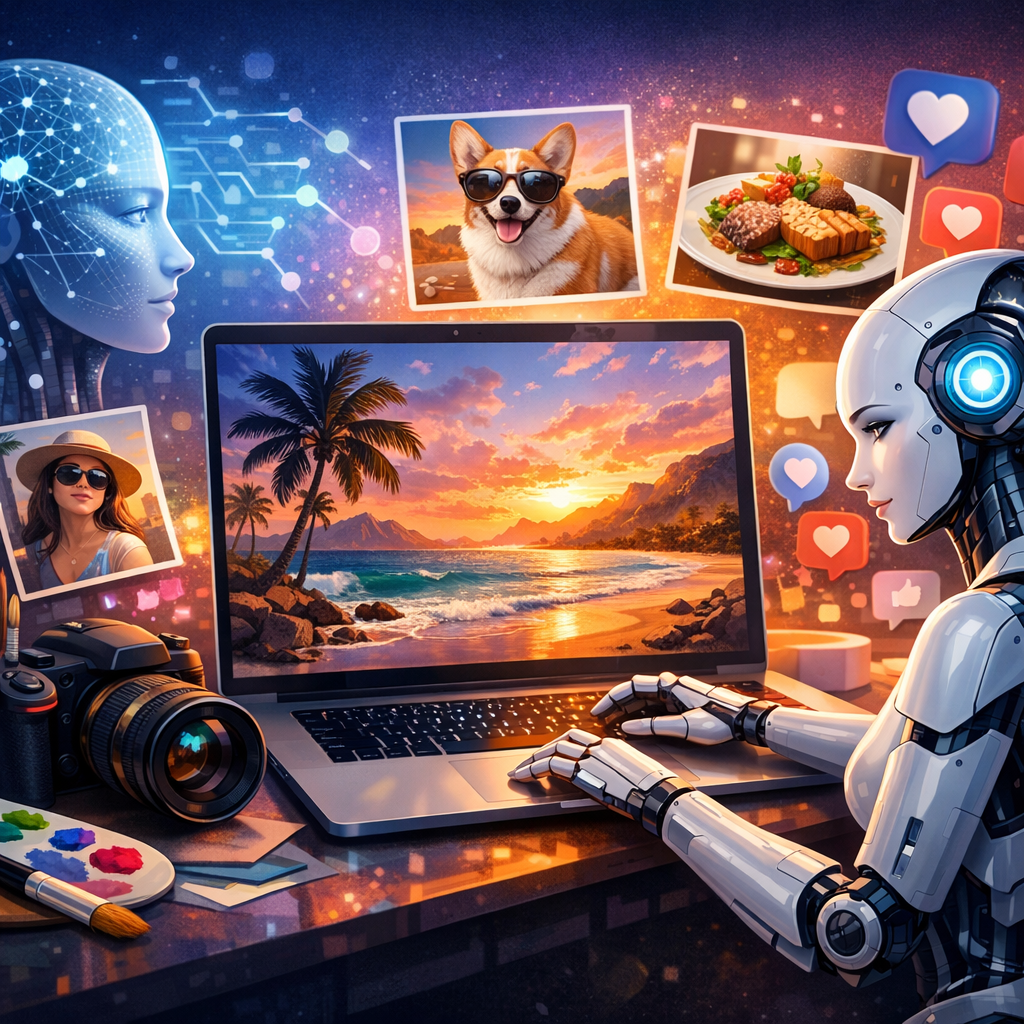
The Shift in How We See AI Images
You’re scrolling through your feed and something feels… off. The image looks polished—maybe too polished. The lighting is perfect, the composition flawless, but somehow it doesn’t land. Then you notice the small label: “AI-generated.” Suddenly, your perception shifts. You pause, maybe even scroll past.
This moment is becoming more common, especially on platforms like LinkedIn where AI-generated visuals are now being flagged. At the same time, more brands and creators are using AI tools than ever before to produce content at scale. So the question naturally comes up: should you be using AI-generated images for social media?
The answer isn’t as simple as yes or no. In reality, it depends on how you use them, why you use them, and whether they actually add value. In this article, we’ll break down what’s really happening with AI images on social media, why some succeed while others fail, and how to use them effectively if you choose to.
The Rise of AI Images—and the Backlash
The Rise of AI Images—and the Backlash
AI-generated visuals have exploded in popularity over the past couple of years. Tools like DALL·E, Midjourney, and integrated platforms inside social media management tools have made it incredibly easy to generate high-quality images in seconds.
For businesses, this is a game changer. Instead of spending hours or days designing visuals, you can create something visually appealing almost instantly. This has lowered the barrier to entry for content creation, allowing smaller teams and solo creators to compete at a higher level.
But there’s a catch. Audiences are catching on.
Platforms like LinkedIn have started labeling AI-generated images, making them easier to identify. And a noticeable portion of users simply don’t like them. Some feel they lack authenticity. Others associate them with low-effort content or generic messaging.
This creates an interesting tension. On one hand, AI images are efficient and scalable. On the other, they can hurt engagement if used poorly.
A useful place to include a visual here would be a comparison chart showing engagement rates between AI-generated images and human-designed visuals across different types of posts.
Why Some AI Images Work—and Others Don’t
Why Some AI Images Fail (and Others Work)
The biggest mistake people make with AI images is assuming that “nice-looking” equals effective. It doesn’t.
If you prompt an AI tool with something vague like “create a modern business image,” you’ll likely get a clean, aesthetically pleasing result. But it will also be generic, forgettable, and disconnected from your message.
These are the kinds of images that fail. They don’t communicate anything meaningful. They don’t help the viewer understand, learn, or feel something. They just exist.
On the other hand, AI images can perform extremely well when they are used with intention.
For example, imagine you’re explaining a complex concept like a marketing funnel. Instead of using a generic stock photo or abstract AI art, you could prompt the AI to generate a clear, labeled visual that walks the viewer through each stage. Suddenly, the image becomes useful, not just decorative.
In real-world usage across social media management platforms, there’s a noticeable pattern: posts that use AI images as a communication tool tend to perform significantly better than those that use them purely for aesthetics.
This is where many businesses either win or lose.
Using AI with Intention, Not Convenience
It’s Not About “Should You”—It’s About “Can You”
The debate around AI images often focuses on whether they should be used at all. But that’s the wrong question.
A more useful question is: can you use them effectively?
Because the reality is, AI is just a tool. And like any tool, its value depends on the person using it.
If you don’t understand your audience, your message, or your goal, AI won’t magically fix that. You’ll just end up generating more content faster—but not better content.
But if you do know what you’re trying to communicate, AI can amplify your efforts.
For instance, businesses that succeed with AI-generated visuals often follow a simple internal process:
They start with a clear idea or insight they want to share. Then they think about how that idea can be visualized in a way that makes it easier to understand. Only then do they use AI to create the image.
This flips the typical approach. Instead of starting with the tool, they start with the value.
A helpful visual here would be a simple flow diagram showing “Idea → Message → Visualization → AI Generation → Final Content.”
What Actually Works in Practice
Real-World Examples from the Trenches
Working inside a social media management environment where AI image generation is integrated, you see both sides of the spectrum.
Some businesses rely heavily on AI to churn out content quickly. They generate images in bulk, pair them with generic captions, and hope something sticks. Most of the time, it doesn’t. Engagement remains low, and the content feels disposable.
Others take a more strategic approach. They use AI selectively, often combining it with strong copywriting and clear messaging. Their images are not just visually appealing—they’re informative or thought-provoking.
For example, a SaaS company might use AI to create a visual breakdown of a new feature, making it easier for users to understand its benefits at a glance. A coach might generate a simple visual metaphor that reinforces a key idea from their post.
In both cases, the AI image is doing a job. It’s not just decoration—it’s communication.
This difference is subtle but critical.
Making AI Images Add Real Value
Practical Tips for Using AI Images Effectively
If you’re considering using AI-generated images in your social media strategy, the goal should be to enhance clarity and value—not just aesthetics.
Start by asking yourself what the image is supposed to do. Is it explaining something? Highlighting a key point? Making the content more digestible? If you can’t answer that clearly, the image probably isn’t necessary.
When creating prompts, be specific and intentional. Instead of asking for a “cool image,” describe the concept you want to visualize. Include details about layout, labels, and purpose.
It’s also worth testing different approaches. Try comparing posts with AI-generated visuals against those with human-designed graphics or even no images at all. Over time, patterns will emerge based on your audience.
Another important factor is transparency. Since platforms are increasingly labeling AI-generated content, it’s better to assume your audience will know. Focus on making the content valuable enough that the label doesn’t matter.
This section could benefit from a numbered checklist or side-by-side examples of “weak vs. strong” AI image use cases for clarity.
Conclusion: The Tool Isn’t the Problem—The Usage Is
AI-generated images aren’t inherently good or bad. They’re simply a reflection of how they’re used.
If you rely on them to fill space or make your content look polished without adding substance, they’ll likely hurt more than help. But if you use them to clarify ideas, communicate more effectively, and provide real value, they can become a powerful asset.
So instead of asking whether you should use AI images, shift the question. Ask whether you can use them well.
Because in the end, attention on social media isn’t won by tools. It’s won by relevance, clarity, and value. AI just happens to be one of many ways to get there.
References and Further Reading
To deepen your understanding of this topic, consider exploring platform guidelines from LinkedIn on AI-generated content labeling, as well as case studies from social media analytics tools like Hootsuite and Buffer that examine engagement trends.
You can also look into research on visual content effectiveness in marketing, such as reports by HubSpot and Nielsen, which often highlight how clarity and relevance impact audience engagement more than production quality alone.
As AI tools continue to evolve, staying informed—and intentional—will be key to using them successfully.